
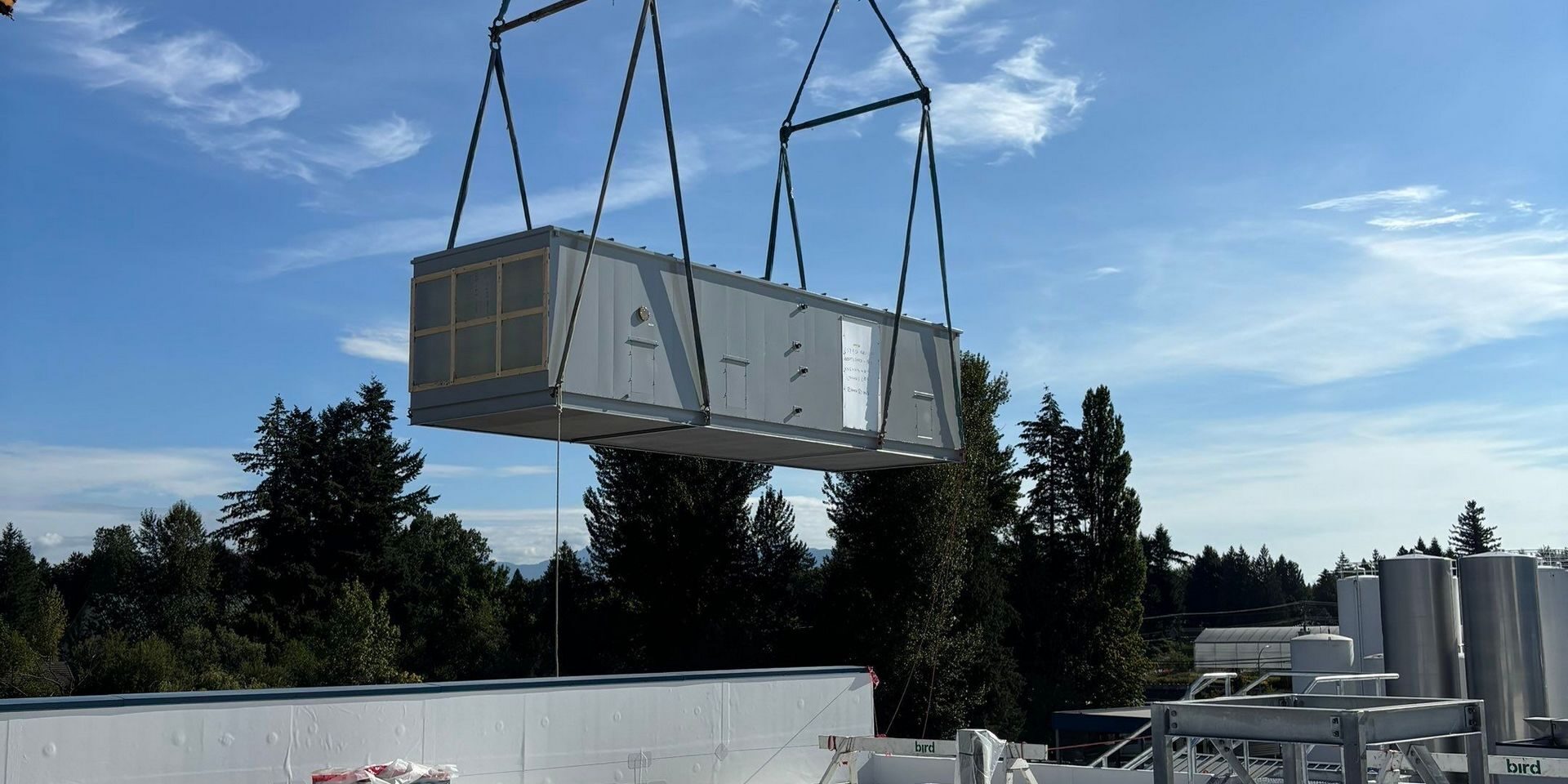
Commercial rooftop units (RTUs) provide heating, cooling, and ventilation for many commercial and industrial buildings. As equipment ages, declining performance can lead to higher energy bills, more service calls, and disruptions to daily operations.
Knowing when to consider a commercial rooftop unit replacement can help you avoid unexpected failures and plan for a significant capital expense.
Signs Your Commercial Rooftop Unit May Need Replacing
These six warning signs can help you determine whether your RTU needs further assessment or whether replacement may be the better long-term option.
1. Your Rooftop Unit Is Aging and Repairs Are Adding Up
Many commercial rooftop units last approximately 15 to 20 years, although equipment quality, installation, operating conditions, and maintenance all affect service life.
As components wear, breakdowns may become more frequent and replacement parts harder to source. An older unit that requires repeated repairs can become expensive to keep running, particularly when each service call addresses a different failing component.
Review recent repair costs alongside the unit’s age and overall condition. Rising expenses without improved reliability may indicate that replacement is becoming more economical.
Age alone doesn’t determine when a unit should be replaced. A well-maintained RTU may remain serviceable beyond its expected lifespan, while a poorly maintained system may develop serious problems much sooner.
2. Energy Bills Keep Increasing
A sustained increase in energy consumption can indicate that your RTU is losing efficiency. Worn components, restricted airflow, dirty coils, and faulty controls can force the system to work harder to maintain indoor temperatures.
Compare utility bills and energy use across similar periods, accounting for changes in weather, occupancy, and operating hours. This helps identify whether the increase is related to the HVAC system or other changes in the building.
If maintenance doesn’t improve efficiency, a professional assessment can help determine whether replacement would reduce energy consumption. Actual savings depend on the equipment, installation, and building conditions.
3. Indoor Temperatures Are Becoming Inconsistent
Uneven heating or cooling, persistent hot and cold spots, and difficulty maintaining thermostat settings can indicate an HVAC performance problem.
The cause isn’t always the rooftop unit itself. Dirty filters, blocked coils, faulty controls, ductwork issues, and inadequate airflow can all affect temperature control. Changes to the building’s occupancy or layout may also have altered its heating and cooling requirements.
If maintenance doesn’t resolve these issues, assess the system’s capacity and air distribution to determine whether the unit is losing performance or no longer suits the space.
4. The Unit Makes Unusual Noises or Shows Visible Damage
Grinding, persistent rattling, and excessive vibration can point to mechanical wear or loose components. Corrosion, damaged panels, and signs of water intrusion also warrant inspection.
Some problems, such as a worn belt or loose component, are relatively straightforward to repair. More extensive deterioration can indicate that the equipment needs substantial work, particularly if other components are also failing.
A prompt inspection can determine whether a targeted repair will address the problem or whether the unit’s overall condition warrants replacement.
5. HVAC Failures Are Disrupting Building Operations
A rooftop unit failure can affect far more than indoor comfort. Depending on the facility, unreliable heating or cooling may interfere with employee productivity, tenant satisfaction, customer access, equipment operation, or temperature-sensitive processes.
Repeated outages can also complicate maintenance schedules and force facility managers to arrange emergency service during periods of high heating or cooling demand.
When evaluating replacement, account for downtime, emergency service costs, and operational disruptions, not just the cost of individual repairs.
6. Your Building’s HVAC Requirements Have Changed
An RTU selected for a building’s original use may no longer suit its current needs. Changes in occupancy, operating hours, floor plan, production processes, or ventilation requirements can affect the system’s required capacity and performance.
Before selecting replacement equipment, reassess the building’s heating and cooling loads, ventilation needs, and expected future use. Simply installing a unit with the same specifications as the existing one may carry forward problems with capacity or system design.
Proper equipment sizing helps ensure the replacement meets current operating demands and accommodates anticipated facility changes.
Repair or Replace Your Commercial Rooftop Unit?
Not every warning sign means your rooftop unit needs replacing. The decision depends on whether repairs can restore reliable performance at a reasonable cost.
When comparing your options, consider:
- Equipment condition: How much useful service life is likely to remain?
- Repair history: Are problems isolated, or are major components failing repeatedly?
- Operating costs: How does current energy consumption compare with expected costs for replacement equipment?
- Business impact: What do unexpected outages cost your facility?
- System requirements: Can the existing unit meet current heating, cooling, and ventilation demands?
- Replacement costs: What will installation, ongoing maintenance, and operation cost?
A commercial HVAC professional can assess the equipment, identify underlying problems, and provide a clearer comparison of repair and replacement costs. This assessment can help you make an informed investment decision and schedule work around your facility’s operations.
Plan Your Commercial Rooftop Unit Replacement
Planning a rooftop HVAC unit replacement before an unexpected failure allows you to budget, evaluate equipment options, and minimize disruption to your facility.
At VETS Facility Services, we help commercial and industrial facilities maintain, repair, and assess their HVAC equipment. If your rooftop unit is becoming unreliable or expensive to operate, contact our team to discuss an assessment and plan the next steps.


